
The "Glass Cockpit"
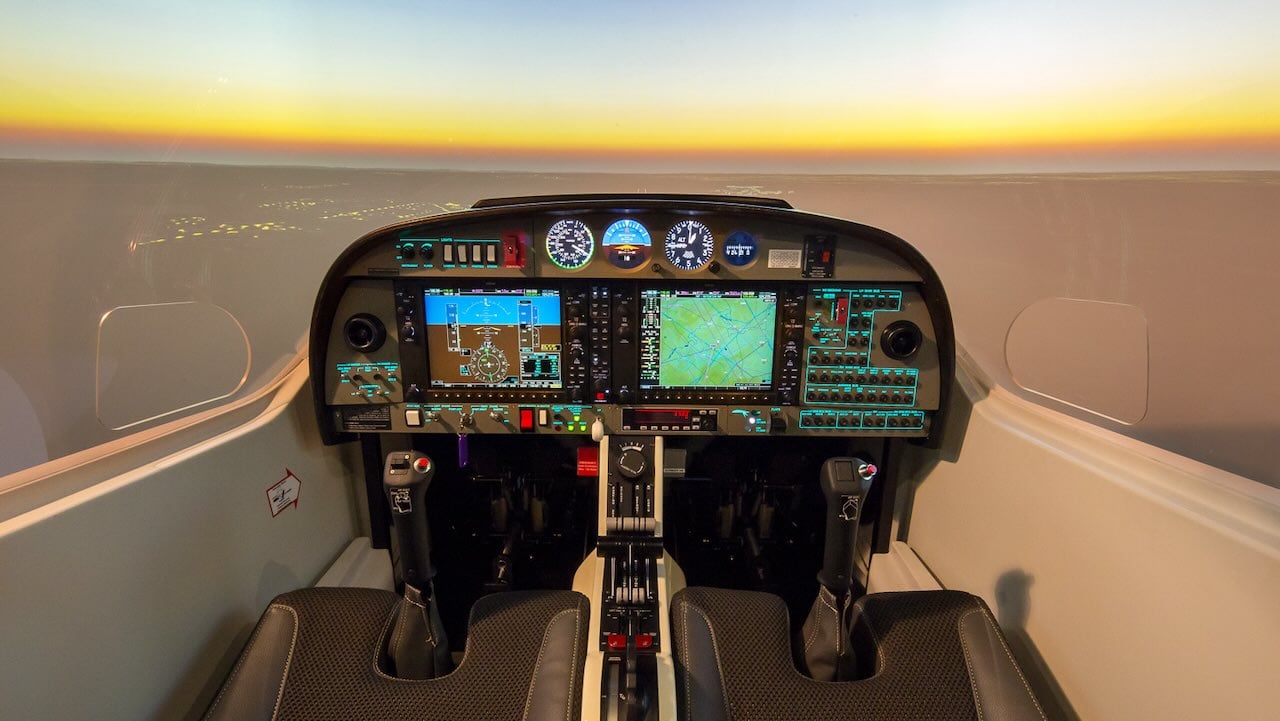
The most modern commercial air transports have fully automated "Glass Cockpit" in which a tremendous array of information is continually presented on displays that show the aircraft's:
- height
- altitude
- heading
as well as:
- the condition of the engines
- other systems
Automatic Navigation and Resource Management
As we have already seen, aircrafts are also provided with inertial guidance systems for automatic navigation form point to point, with continuous updating of:
- weather conditions
- wind
- other factors
From this point of view, Cockpits have become so automated that the training phases are focused on "Resource Management", that is the organization and supervision of the available instruments to assure that crew members keep alert even though their aircraft flies autonomosly.
Other systems implemented at the Glass Cockpit
This array of instrumentation is supplemented by improved metereological forecasts which reduce weather hazards, including wind shear and microburst.
In addition, the availability of precise positioting from Earth-orbiting satellites makes navigation safer and more precise.
The implementation of sophisticated defogging and anti-icing systems completed instrumentation for operation in adverse weather.
Advantages of the Glass Cockpit
The Glass Cockpit has several features which makes its use advantageous for pilot:
- the pilot will get numerical values right on the glass display for height and speed;
- displaying weather information is one of the most useful aspects that can provide pilots with forecasts, radar reports;
- most glass cockpits calculate attitude, airspeed and altitude with ADC adn AHRS;
- glas cockpits show position compared to airspace buondaries to assist pilots;
- in most glass cockpits the pilot can type frequencies into a keyboard.